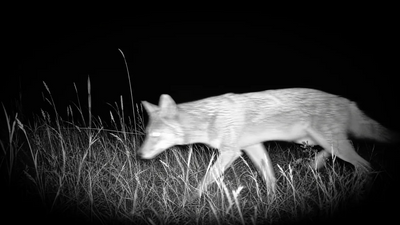
Digital night vision has improved dramatically over the past decade. Today's devices produce brighter images, longer viewing distances, and better detail in low-light environments than ever before.
But these improvements aren't simply the result of higher resolution or stronger infrared illumination. Much of the progress comes from advances in CMOS imaging sensor technology—the component responsible for capturing every photon that reaches the camera.
If you're choosing a digital night vision device, understanding how modern CMOS sensors work can help you make a more informed decision.
From Analog Tubes to Digital CMOS
Traditional night vision relied on image intensifier tubes, which amplify available light through vacuum-tube technology. While extremely effective, these systems are expensive, delicate, and can be damaged by sudden exposure to bright light.
Modern digital night vision uses CMOS (Complementary Metal-Oxide Semiconductor) sensors instead.
Compared with traditional image intensifier tubes, CMOS technology offers several practical advantages:
- Greater durability for everyday outdoor use
- Digital image and video recording
- Compatibility with image processing algorithms
- Reliable operation when paired with infrared illumination
These advantages have made digital night vision increasingly popular for wildlife observation, hunting, farm security, camping, and outdoor exploration.
Why Sensor Design Matters
Not all CMOS sensors perform equally well in darkness.
The challenge isn't simply capturing light—it's capturing enough useful information while minimizing image noise.
A higher-quality sensor can produce:
- Cleaner images in extremely low light
- Better subject separation from dark backgrounds
- Improved detail at longer viewing distances
- Reduced image grain when digital gain is applied
This is why two devices with similar resolutions may deliver very different nighttime performance.
Back-Side Illuminated (BSI) Sensors
One of the biggest improvements in recent years has been the adoption of Back-Side Illuminated (BSI) sensor architecture.
Traditional Front-Side Illuminated (FSI) sensors place electrical wiring above the light-sensitive layer, reducing the amount of light each pixel can receive.
BSI sensors move this circuitry behind the sensor, allowing more light to reach every pixel.
The result is improved light sensitivity—an important advantage when operating in extremely dark environments where every available photon matters.
Signal-to-Noise Ratio Is More Important Than Resolution
Many buyers focus on specifications like 1080P or 4K resolution.
However, image quality in darkness depends just as much on Signal-to-Noise Ratio (SNR).
A sensor with excellent SNR produces cleaner images with less visible grain, especially when viewing distant subjects or using higher infrared illumination levels.
In practical use, a cleaner 1080P image often provides more usable detail than a noisy higher-resolution image.
Understanding 850nm and 940nm Infrared
Infrared illumination is what allows digital night vision devices to see in complete darkness.
The two most common wavelengths are:
850nm Infrared
- Longer effective illumination distance
- Industry standard
- Produces a faint red glow visible from the front of the device
940nm Infrared
- Completely invisible to the naked eye
- Better suited for discreet observation
- Typically offers slightly shorter illumination range than comparable 850nm systems
High-performance 940nm night vision systems rely on sensitive image sensors to maintain image quality while using lower-energy infrared light.
What These Technologies Mean in Real Use
Modern CMOS technology doesn't just improve specifications on paper—it delivers noticeable benefits in the field.
Users can expect:
- Better image clarity in extremely low-light conditions
- Improved contrast between wildlife and background environments
- Cleaner digital zoom performance
- More reliable target identification at longer distances
- Better performance when using invisible 940nm infrared illumination
Whether you're monitoring property, observing wildlife, or exploring after dark, advances in sensor technology make modern digital night vision significantly more capable than previous generations.
Choosing the Right Night Vision Device
While features like resolution and magnification are important, they tell only part of the story.
Sensor quality, infrared performance, image processing, and overall optical design work together to determine how well a device performs after sunset.
Understanding these technologies helps you compare products beyond marketing specifications and choose the model that best fits your needs.
Discover Modern Night Vision Technology
Advances in CMOS sensors, image processing, and infrared technology continue to improve nighttime visibility and overall performance. Understanding these technologies makes it easier to choose the right night vision device for your needs.
Explore the TELUHA collection to compare modern night vision technologies and features.